Skills / Build It Right / Buying, deals & planning
Vendor Evaluation

Vendor & Platform Selection

Runs a defensible vendor selection: requirements, longlist, a weighted six-dimension scorecard and a negotiation brief.

Private skill · shared by invitation · How access works
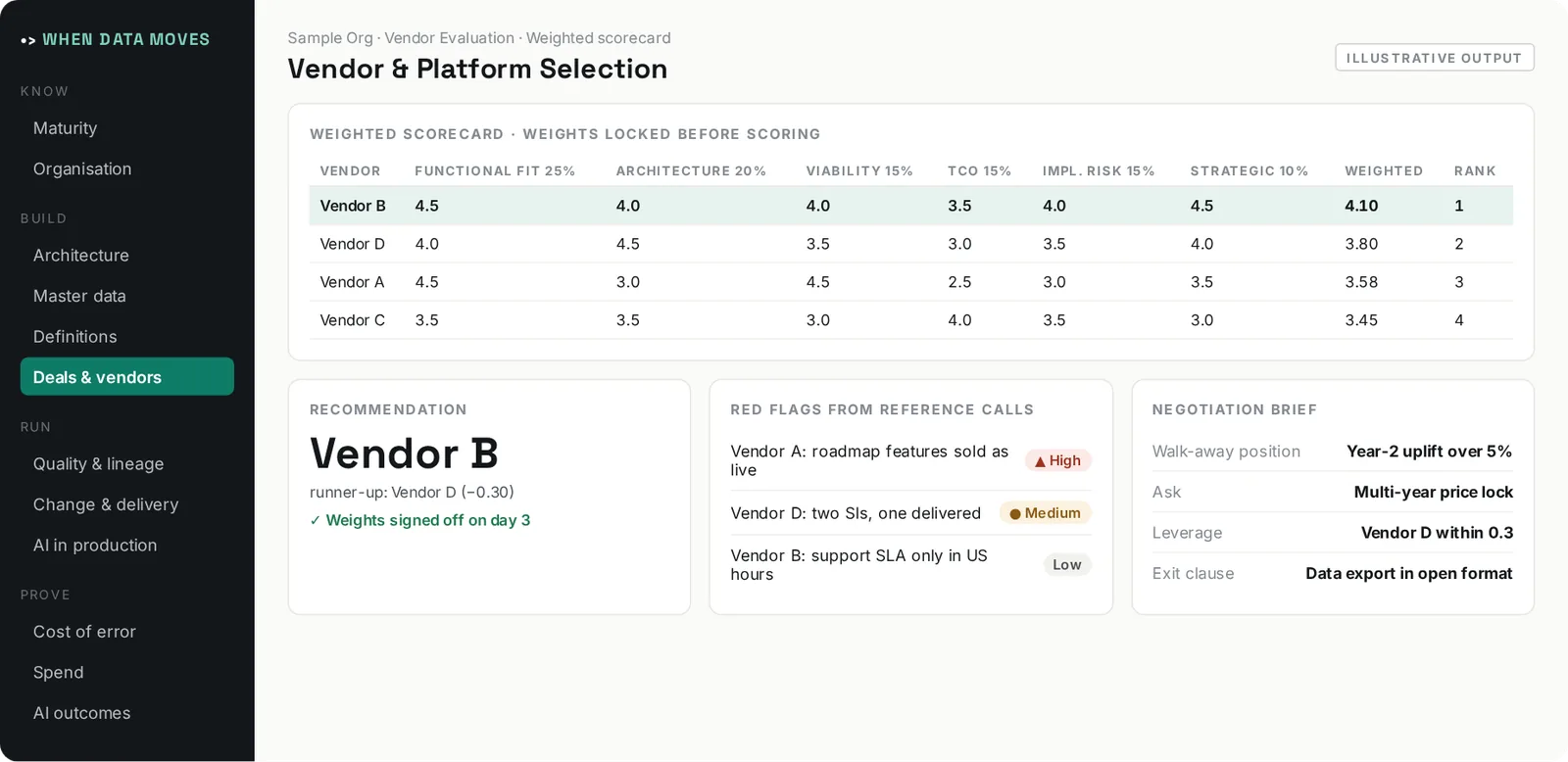
Illustrative output of Vendor & Platform Selection: Runs a defensible vendor selection: requirements, longlist, a weighted six-dimension scorecard and a negotiation brief.
Illustrative output with sample data.
The challenge

A scorecard reverse-engineered to justify a decision already made.

Choreographed demos

Every pitch looks the same and every reference is hand-picked.

Weights after scores

Criteria shift until the favourite wins.

TCO surprises

Year-two cost and lock-in were never modelled.

No leverage

The contract is signed without a walk-away position.

How it works

From first question to finished output.

Capture requirements

Use case, constraints, budget and must-haves, locked before any vendor is named.

Build the longlist

5–10 candidates across market tiers.

Score and weight

Functional fit, architecture, viability, TCO, implementation risk and strategic alignment. Weights are set first.

Recommend and negotiate

A recommendation brief plus a negotiation playbook with a walk-away position.

What you get

  • Weighted scorecard: functional fit, architecture, viability, TCO, implementation risk, strategic alignment
  • Negotiation playbook
  • A defensible decision record

What goes in

Requirements, shortlist, vendor responses, pricing, reference calls.

Time to answer

As a consulting engagement8 weeks2 people · 16 consultant-weeks
Running the skill2–3 hoursone sitting, start to finished output

What it still needs from you

The reference calls, and reading what vendors avoid answering.

Also in Build It Right

See where this fits in the sequence →

See Vendor & Platform Selection in action.

Thirty minutes with Harveer, on your own data problem.