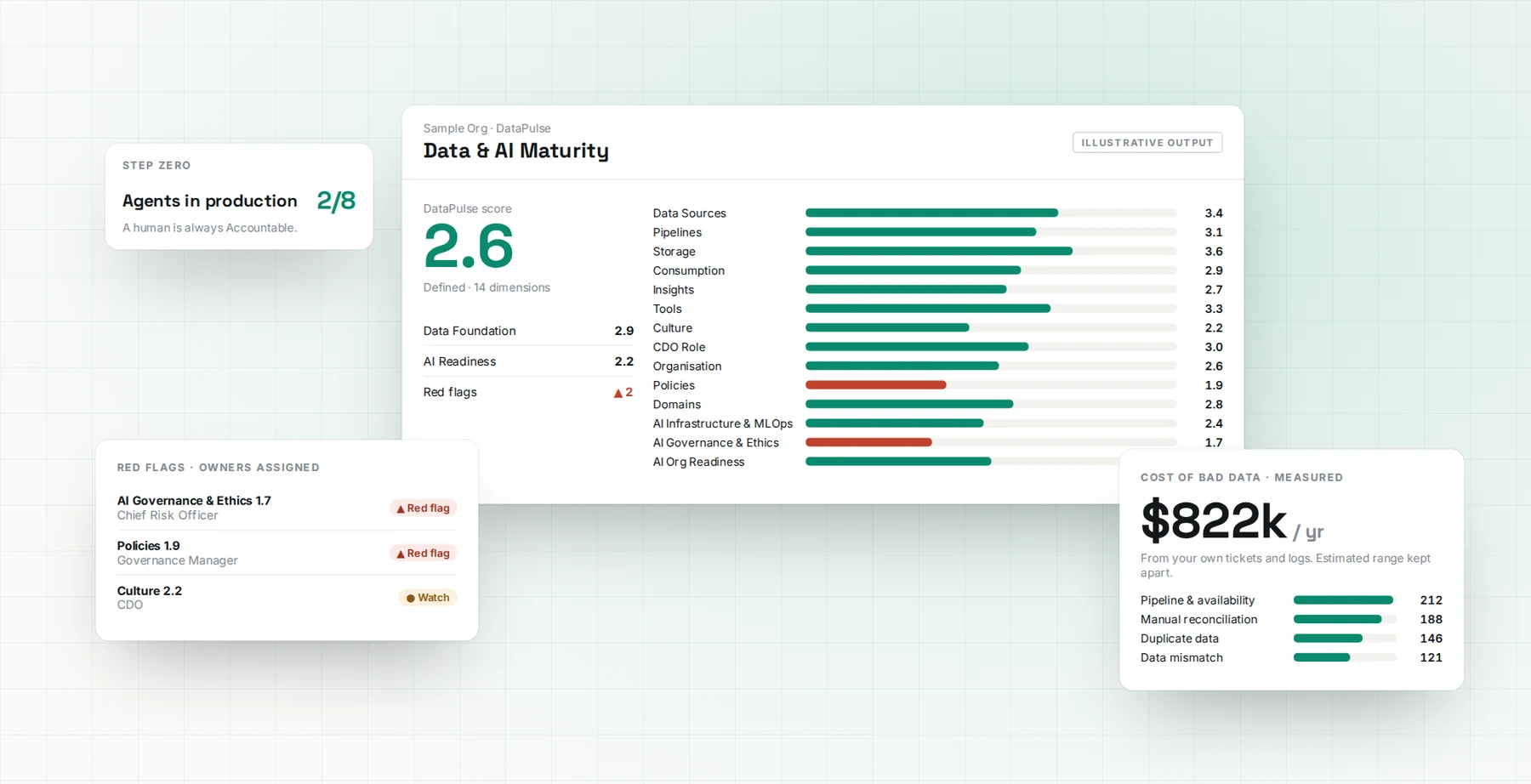
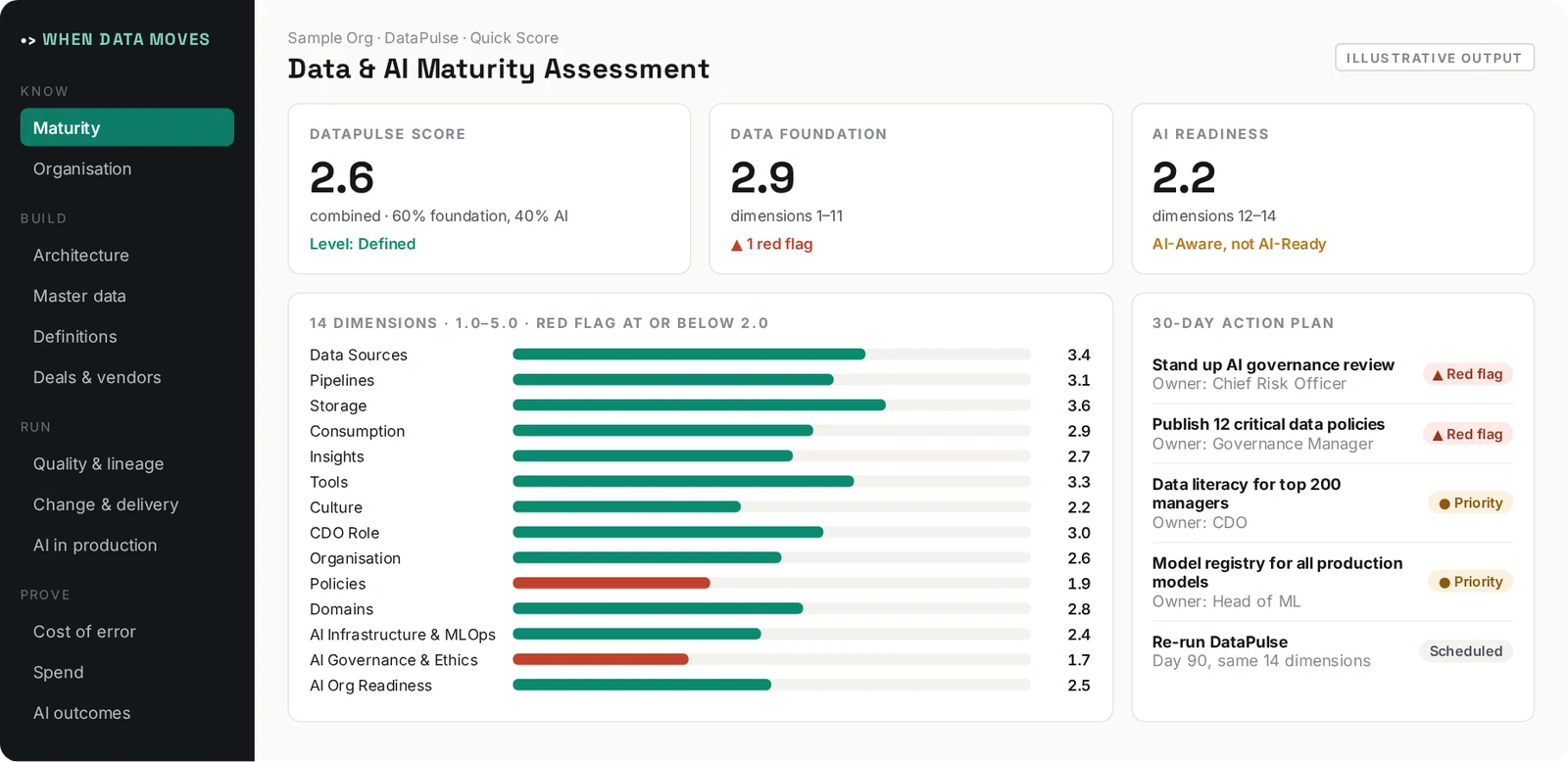
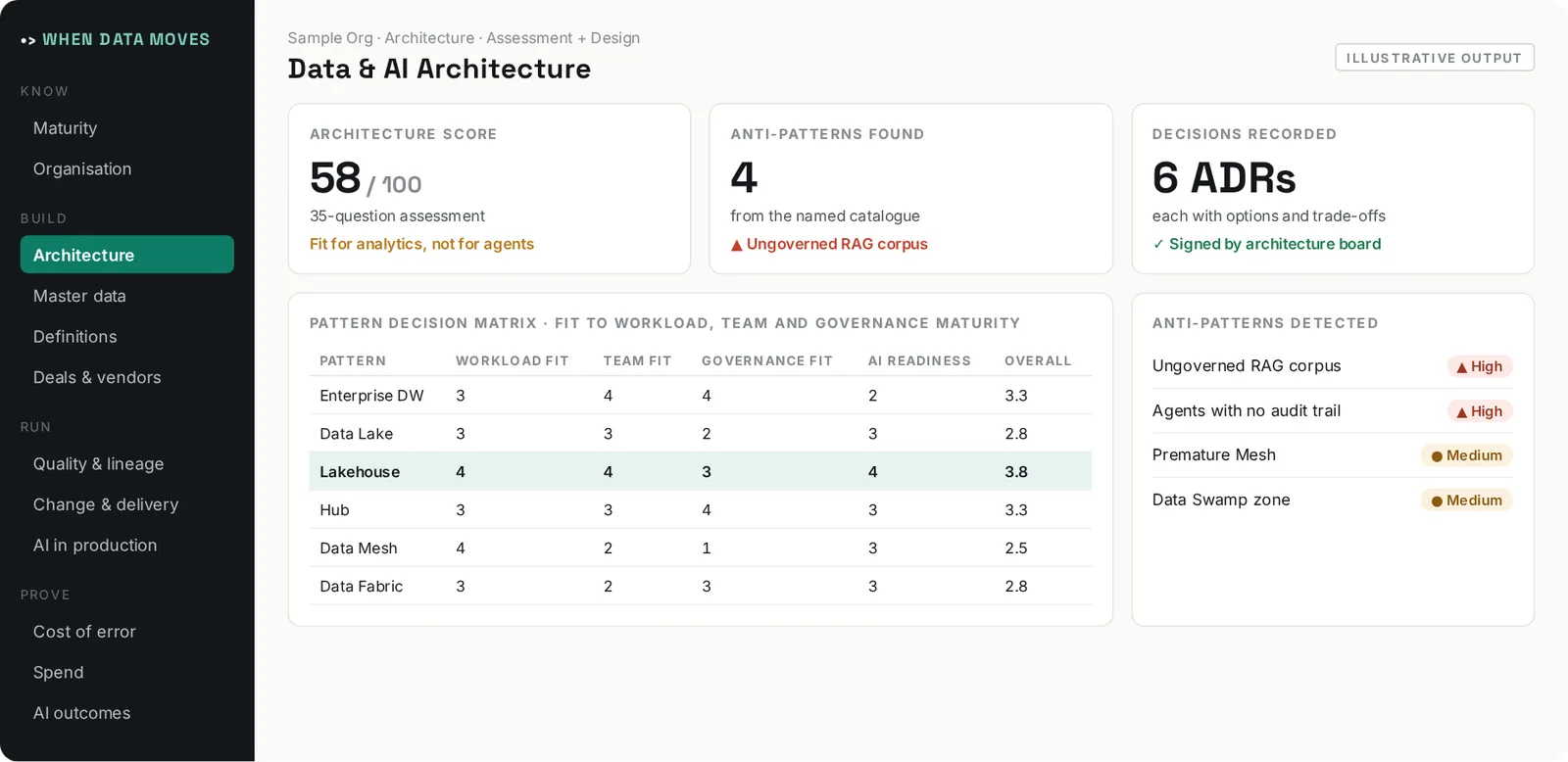
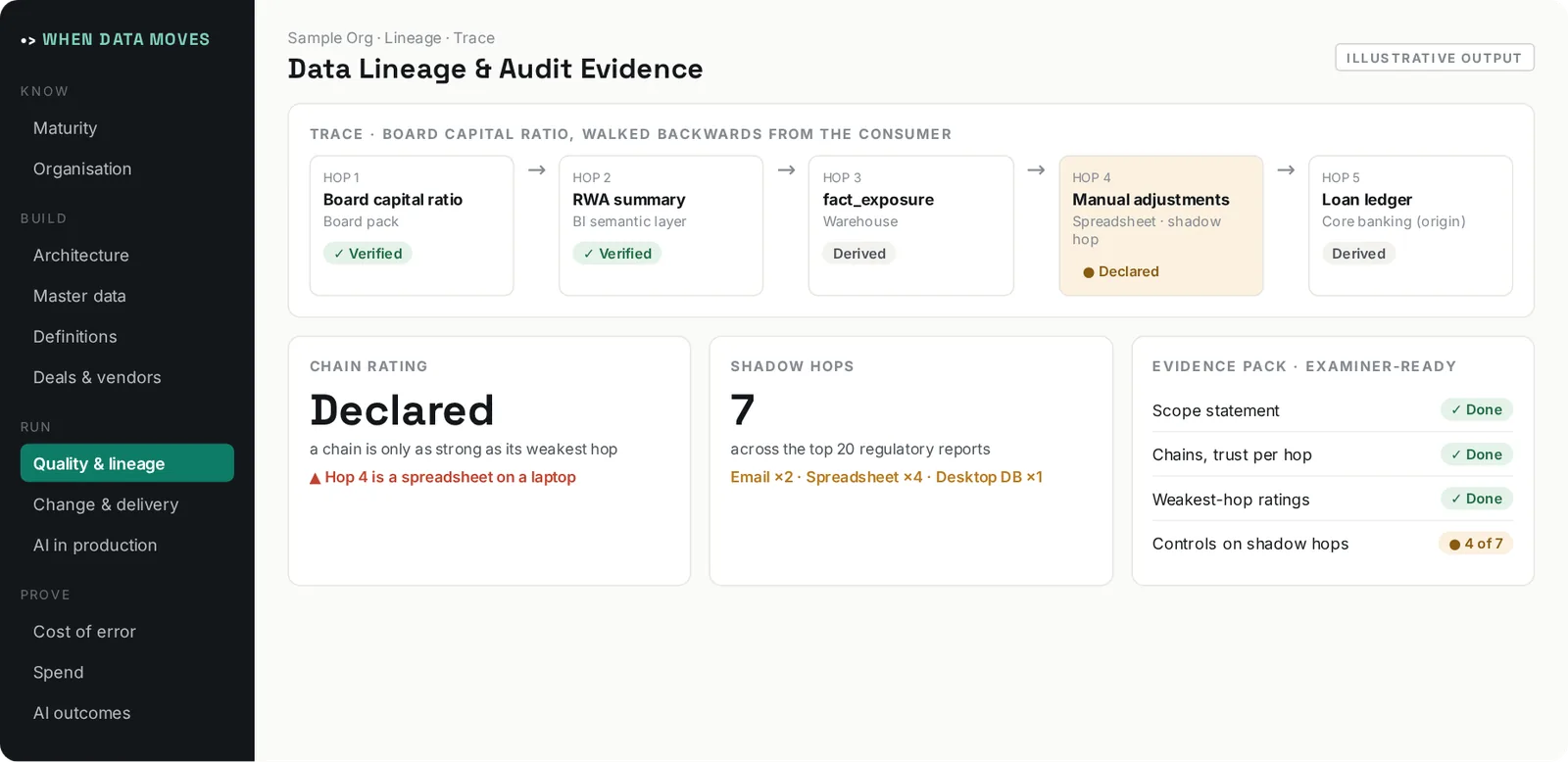
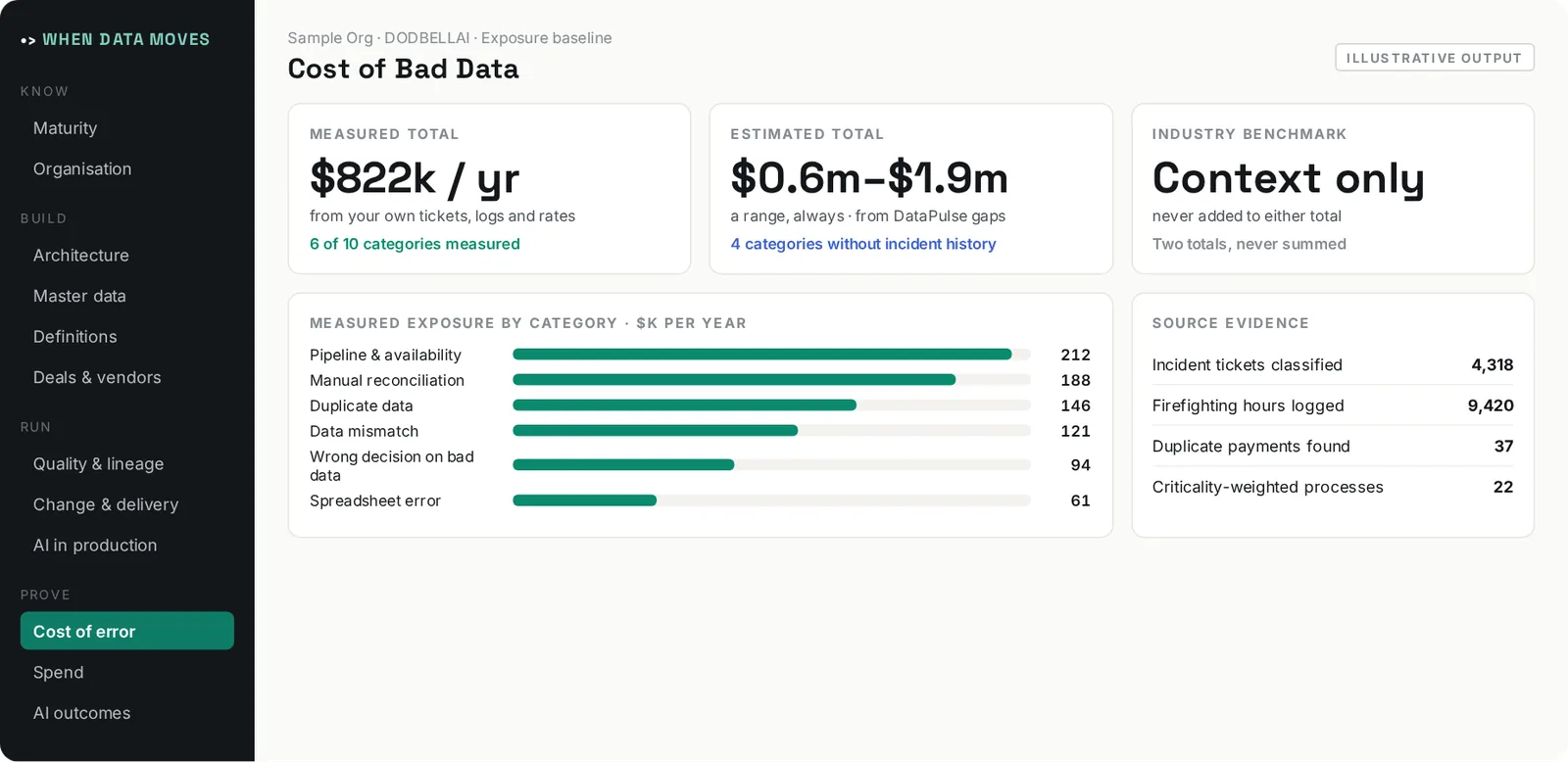
Eighteen CDO-grade diagnostics that run inside your AI assistant, plus the practitioner who built them. Know where you stand, build it right, run it in production, and prove the value.
A skill is a diagnostic you run, not a document you read.
Each skill packages a consulting method into a structured conversation inside your AI assistant. It asks the questions, scores the answers the same way every time, and produces a finished output.
Pick the question
Start from what the board is asking: where are we, what is it costing, can we trust this number.
Run the skill
One sitting with the people who know the answers. No data extract, no tool install, no procurement cycle.
Act on it
Take the scored output and red flags into a working session with Harveer, or run with them yourself and re-run next quarter.
Access
Private skills, shared by invitation.
The skills themselves are not downloadable from this site. They live in private repositories on GitHub, and Harveer grants access personally, usually after a working session.
Scan to open the repository page. Access is invite-only.
How you win
The analysis in hours, not months.
Weeks → hours
Maturity baseline
A full DataPulse assessment (3–5 hours), against a typical 12-week consulting assessment.
457
Consultant-weeks
Of structured analysis the eighteen skills stand in for.
Same
Every run
Fixed dimensions and scoring, so the second run shows movement.
1 human
Always accountable
The skill does the analysis. You still own the decisions.
Consulting comparisons are practitioner estimates (team size × weeks for the same analysis bought as an engagement). Firms don't publish rate cards, so there is no citable public benchmark. They are offered to be challenged.
Built by
Harveer Singh
Fortune 500 Chief Data Officer and author of When Data Moves. Every method here comes from building and running the thing, not recommending it.
From inside the firms. Tier-one strategy consulting and systems integration: how the methods are built and how engagements are staffed.
From the other side of the table. A Chief Data Officer accountable for the outcome, not the report.
Where it goes next. The same skills packaged for every major AI assistant, and exposed as MCP servers your own agents can call.
See it on your own data problem.
Thirty minutes. Bring the question your board is asking.
Thirty minutes with Harveer. Tell him what your board is asking, and he'll tell you which skill to run first, and whether you need anyone alongside it.
No pitch deck. A working conversation about your situation.
A personal reply. Every request is read by Harveer, usually answered within two working days with a calendar invite.